The Benefits of Multi-Layer Reinforced Rubber Fabrics
Multi-layer reinforced rubber fabrics are widely used in industrial applications where ordinary rubber materials may not provide sufficient strength, flexibility, or structural stability. By combining rubber compounds with multiple layers of textile reinforcement, manufacturers can develop materials designed to withstand demanding mechanical conditions. These composite structures offer advantages in applications involving repeated movement, pressure, tension, and environmental exposure. Their performance makes them valuable in industries such as transportation, manufacturing, infrastructure, and industrial equipment production. One of the primary benefits of multi-layer reinforced rubber fabrics is improved tensile strength. The reinforcement layers help distribute pulling forces throughout the material, reducing the stress concentrated in individual areas. This is particularly important in applications where rubber fabrics must support loads or maintain their shape under continuous tension. The combination of rubber and textile reinforcement provides a balance between flexibility and mechanical strength that may be difficult to achieve with unreinforced rubber alone.
Another important advantage is enhanced dimensional stability. Rubber materials can stretch or deform when exposed to repeated loading, especially under demanding operating conditions. Reinforcement layers help control excessive elongation and maintain the overall structure of the fabric. This stability is valuable in industrial systems where consistent dimensions are necessary for proper installation, alignment, and operation. By reducing unwanted deformation, multi-layer structures can contribute to more predictable equipment performance. Multi-layer construction can also improve resistance to tearing and mechanical damage. In industrial environments, rubber fabrics may encounter sharp edges, uneven contact surfaces, vibration, and repeated bending. A reinforced structure helps distribute these forces and can reduce the likelihood of localized damage spreading through the material. The effectiveness of this protection depends on the reinforcement type, layer arrangement, rubber formulation, and manufacturing quality.
Flexibility remains another key feature of reinforced rubber fabrics. Although additional reinforcement can increase structural strength, the material must still accommodate the movement required by its application. Properly designed multi-layer structures combine textile support with flexible rubber compounds, allowing the finished product to bend and adapt without sacrificing its essential mechanical properties. This balance is particularly useful in equipment that experiences repeated movement or changes in operating direction. The bonding between individual layers also plays a significant role in product reliability. If the rubber and reinforcement materials are not properly integrated, repeated stress may cause separation between layers. This can weaken the overall structure and reduce service life. Appropriate material selection and controlled manufacturing processes help improve adhesion and create a more unified composite. Consistent bonding is therefore an important consideration when evaluating the quality of multi-layer reinforced rubber fabrics.
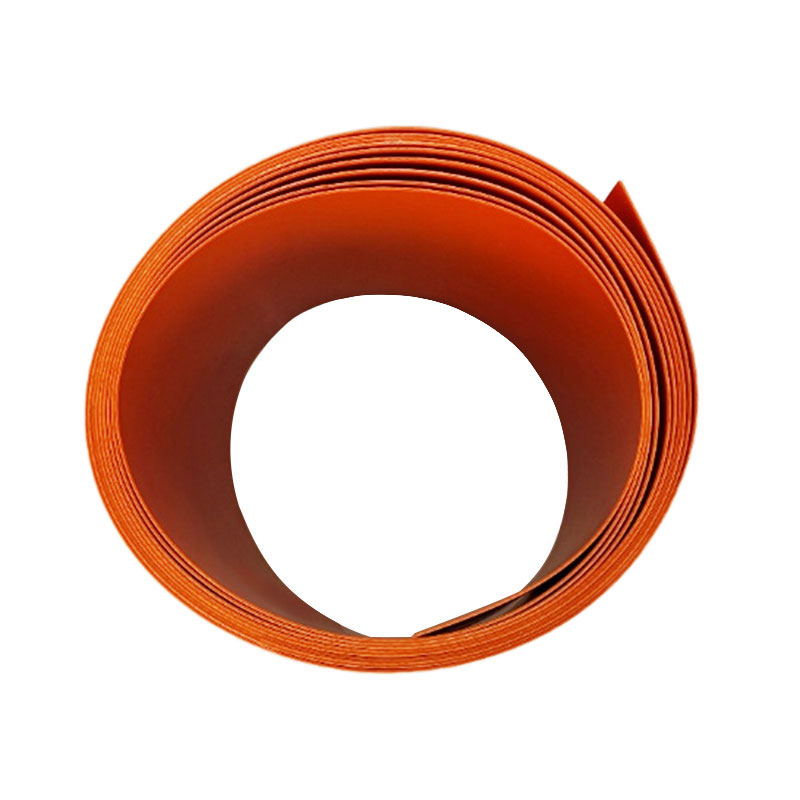
Another benefit is the ability to customize the material according to specific industrial requirements. Different reinforcement fabrics, rubber compounds, thicknesses, and layer configurations can produce different performance characteristics. Some applications may prioritize tensile strength, while others require greater flexibility, abrasion resistance, or dimensional stability. By adjusting the material structure, manufacturers can develop products that better match the operating conditions of individual customers rather than relying on a single standard specification. Multi-layer reinforced rubber fabrics can also provide improved resistance to challenging working environments when the rubber compound is selected appropriately. Industrial materials may be exposed to moisture, dust, oils, temperature variations, and other environmental factors. The outer rubber layers can help protect the reinforcement, while the internal structure provides mechanical support. However, resistance to particular chemicals, temperatures, or environmental conditions depends on the actual formulation and should be evaluated according to the intended application.
In addition to performance advantages, these materials can support more reliable long-term operation. A properly designed reinforced fabric may resist common forms of mechanical deterioration and maintain its functional properties through repeated use. This can help reduce unexpected maintenance and replacement requirements. Nevertheless, product lifespan also depends on installation quality, operating loads, environmental exposure, and routine inspection. Selecting the correct material structure is essential to achieving the expected benefits. For industrial buyers, choosing a multi-layer reinforced rubber fabric requires more than comparing thickness or appearance. Important factors include the required tensile strength, expected elongation, bending frequency, contact conditions, working temperature, and type of reinforcement. Buyers should also consider how the material will be installed and whether it will experience continuous tension, compression, or vibration. Providing these details to the manufacturer helps ensure that the selected product is suitable for its actual working environment.
Jiangsu Keqiang New Materials Co., Ltd. specializes in the research, development, production, and sales of special high-performance rubber products, including special rubber fabrics. With a strong focus on technological innovation and product quality, the company develops rubber material solutions for industrial applications requiring dependable mechanical performance. Its experience in special rubber products supports customers seeking suitable materials for sealing, buffering, anti-corrosion, transmission, and related applications. Multi-layer reinforced rubber fabrics offer a practical combination of strength, flexibility, dimensional stability, and application adaptability. Their layered construction helps distribute mechanical stress while allowing manufacturers to tailor material properties to different industrial needs. By combining appropriate reinforcement, rubber formulation, and manufacturing control, these products can provide reliable performance in demanding environments and contribute to more stable, efficient industrial operations.