What Causes Conveyor Belt Edge Damage and How Can It Be Prevented?
Conveyor belts are essential components in many industrial material handling systems. They transport products and materials continuously, supporting production efficiency across manufacturing, warehousing, mining, packaging, and other industries. Although the belt surface receives considerable attention during maintenance, its edges are equally important. Conveyor belt edge damage is a common problem that can affect operational stability, shorten service life, and increase maintenance costs. Understanding its causes is the first step toward preventing unnecessary wear and equipment downtime. One of the most common causes of edge damage is belt misalignment. When a conveyor belt does not travel along the center of the conveyor structure, one edge may repeatedly rub against rollers, guide components, or the conveyor frame. This continuous friction gradually wears down the rubber surface and may eventually expose the internal reinforcement. If the misalignment remains uncorrected, the damage can become more serious and affect the overall condition of the belt.
Improper roller installation can also contribute to edge wear. Rollers that are not correctly aligned or positioned may cause uneven contact and create forces that push the belt toward one side. Damaged, worn, or incorrectly adjusted rollers can produce similar problems. Regularly checking roller alignment and condition helps maintain a stable belt path and reduces unnecessary friction along the edges. Uneven material loading is another important factor. When materials are consistently deposited closer to one side of the belt, the uneven weight distribution can influence belt tracking. Concentrated loads may also increase pressure on particular sections of the belt and create localized stress. Properly positioned loading equipment and controlled material feeding can help distribute materials more evenly and reduce the risk of edge damage.
The condition of the conveyor structure should not be overlooked. A frame that is improperly installed, distorted, or affected by vibration may cause the belt to move irregularly during operation. Even small structural inconsistencies can become significant when the conveyor operates continuously. Checking the supporting structure, rollers, pulleys, and loading points as part of routine maintenance helps identify potential sources of tracking problems before they cause serious damage. Material accumulation can also accelerate edge deterioration. Dust, debris, and transported materials may collect around rollers, pulleys, and other conveyor components. When these particles become trapped between the belt and rotating parts, they can create additional friction and uneven contact. Some accumulated materials may also interfere with normal belt movement. Effective cleaning procedures and suitable belt-cleaning equipment help maintain a cleaner operating environment.
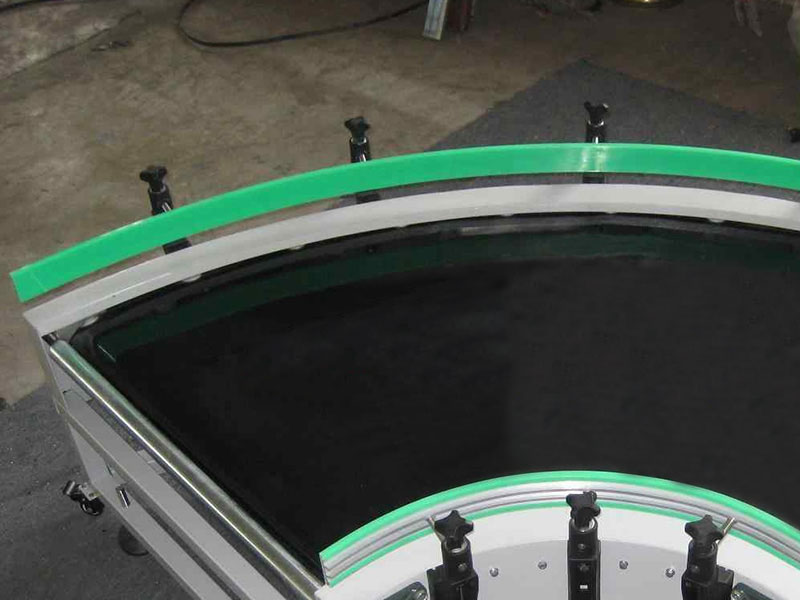
The physical properties of the conveyor belt itself are equally important. Insufficient tensile strength, unsuitable flexibility, or inconsistent material construction may affect how the belt responds to operating forces. A belt that cannot maintain its dimensional stability under the expected workload may be more vulnerable to tracking problems and edge deformation. Selecting a conveyor belt with suitable mechanical properties is therefore essential for achieving reliable long-term performance. Environmental conditions can further influence edge durability. Exposure to abrasive particles, oils, moisture, chemicals, and changing temperatures may gradually affect the rubber material. If the belt compound is not suitable for the working environment, its edges may become brittle, swollen, softened, or worn more quickly. Matching the rubber formulation to actual operating conditions helps reduce premature deterioration and maintain material performance.
Preventing conveyor belt edge damage requires a combination of proper installation and regular inspection. Before operation, the conveyor system should be checked to ensure that rollers, pulleys, and supporting structures are correctly positioned. During operation, maintenance personnel should observe whether the belt consistently travels along the center of the conveyor. Early signs such as uneven edge wear, fraying, cracking, or repeated contact with the frame should be investigated rather than ignored. Correct belt tension is another important part of prevention. Excessive tension can place unnecessary stress on the belt structure, while insufficient tension may contribute to slipping and unstable tracking. The appropriate tension depends on the conveyor design, belt construction, transported materials, and operating conditions. Following the equipment manufacturer's recommendations helps maintain stable movement without exposing the belt to avoidable mechanical stress.
For industrial buyers, choosing the right conveyor belt should involve more than considering its width, thickness, and price. Material characteristics, reinforcement structure, tensile strength, flexibility, abrasion resistance, and environmental compatibility all influence its ability to perform reliably. Providing detailed information about the conveyor system and working conditions allows manufacturers to recommend a more suitable product for specific applications. Jiangsu Keqiang New Materials Co., Ltd. specializes in the research, development, production, and sales of special high-performance rubber products, including light rubber conveyor belts. Guided by technological innovation and a commitment to quality, the company focuses on providing rubber material solutions for different industrial requirements. Its experience in special rubber products supports customers seeking dependable materials for conveying, transmission, sealing, and other demanding applications.
Conveyor belt edge damage may appear to be a minor maintenance issue, but it can indicate deeper problems involving alignment, loading, installation, or material selection. By identifying these factors early, maintaining the conveyor structure, and choosing rubber belts suited to actual working conditions, industrial operators can reduce unnecessary wear and improve equipment reliability. A well-maintained conveyor system not only helps extend belt service life but also supports safer, more stable, and more efficient production operations.